

Selecting the Best Grinding Mill: SAG Mill vs Ball Mill
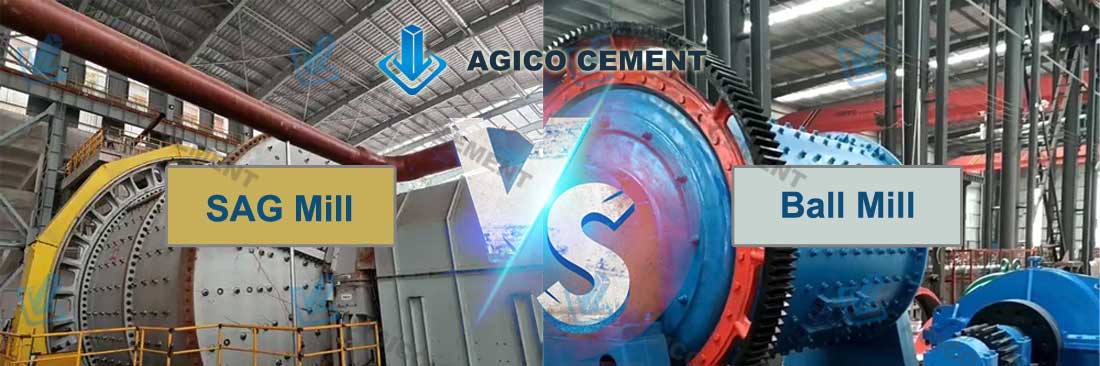
Semi-autogenous mills (SAG mills) and ball mills are 2 types of grinding equipment, both of them are widely used in mineral processing plants, but each of them plays a unique role in the grinding plant The first step of choosing the right model is to understand their differences, AGICO will lead you through the major differences in following aspects: structure, working principles, operating conditions, and applications. Looking at the details of how they are used in grinding applications, and choosing the right type of milling machine for specific process requirements.
Main Differences Between SAG Mill And Ball Mill
SAG Mill and Ball Mill Structure
Structural design of SAG mill and ball mill has major differences and it’s easy to separate them. For a SAG mill is typically manufactured in much larger size, with body shell diameters often exceeding 10 meters. The internal shell is fitted with wave-type liners, whose contoured surfaces are engineered to lift large ore particles to a significant height and drop them, generating breakage through the ore’s own impact energy.
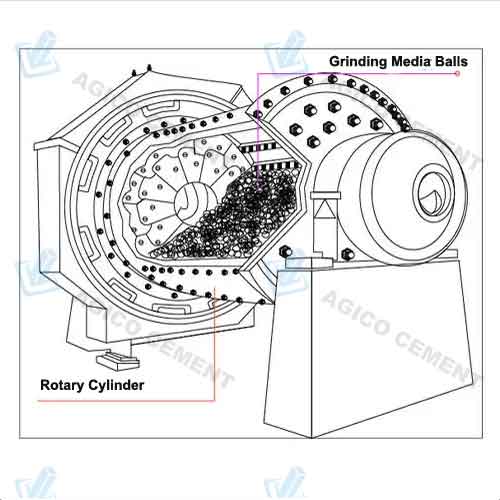
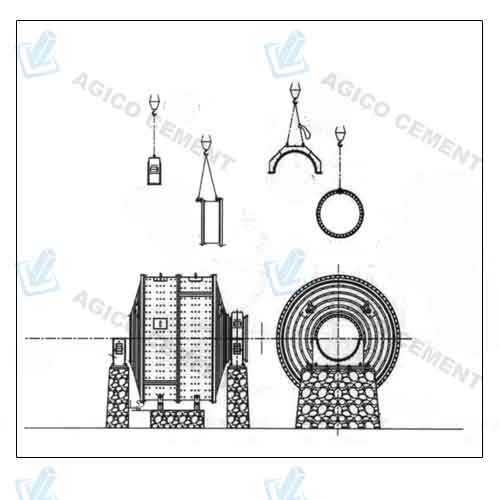
A ball mill is designed in smaller sizes, along with smaller capacity. The liner of the internal shell is very simple, and the inner shell is installed with flat or step liners. It realizes grinding effect primarily by the cascading motion of the steel charge. The driving systems differ as well: SAG mills commonly use gearless ring motor (GMD) drives, while ball mills are usually driven by a traditional girth gear and pinion system.
Working Principle of SAG Mill and Ball Mill

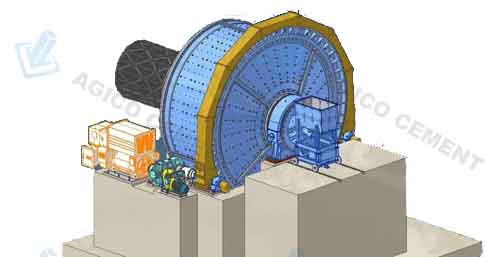
A SAG mill operates in a hybrid autogenous–ball grinding mode. The mill contains both the ore feed and a small volume of steel balls, with a typical ball charge of 8–15% by volume. Large ore fragments collide with one another to achieve primary breakage, while steel balls assist in grinding the tougher fractions.
A ball mill, by contrast, is a fully media-based grinding system with a ball charge typically ranging from 30–40%. Size reduction is accomplished entirely through ball-to-ball and ball-to-liner impacts. Feed size requirements clearly distinguish the two: a SAG mill can process run-of-mine ore with particle sizes of 200–350 mm, whereas a ball mill generally requires the feed to be pre-crushed to below 25 mm.
SAG Mill and Ball Mill Applications
- Regarding ore characteristics, SAG mills perform better when processing hard, competent ores. For example, in porphyry copper deposits, quartz-rich rock masses generate sufficient impact energy for effective autogenous breakage.
- Ball mills are better suited to medium-hard ores. For certain lead–zinc ores or gold ores, feeding a ball mill after primary crushing delivers more efficient fine grinding performance.
- In mineral processing plants such as gold mining plants, SAG mills are commonly used as the single primary grinding equipment in the grinding production line, and they can directly affect the capacity of the grinding plant. While ball mills are typically used for secondary or tertiary grinding, and they are used in groups.
SAG Mill and Ball Mill Cofiguration and Cost Analyze
Grinding Process Configuration
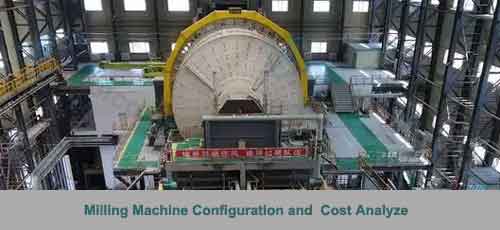
For the grinding process of mining plants,the equipment configuration can be different,so the grinding plant layout varies for the differences in flowsheet configuration. A SAG Mill-based grinding plant has no need to install secondary and tertiary crushers and less conveying and screening equipment,so its workflow is simplified and requires a smaller plant footprint. However, single-machine power ratings frequently exceed 6 MW, which imposes heavy demands on the power supply.
A ball mill–based multi-stage grinding circuit contains more equipment, but each unit has a lower installed power—typically 1.5–3 MW. Ball mill based grinding plant are flexible in the following aspect. The capacity of ball mills can be adjusted quickly by changing ball charge, slurry density, and classification efficiency.It consumes less power in small-volume grinding tasks. For SAG mills, workers can change the capacity by changing the feed rate and steel ball amount, this process is much slower than SAG mill.
Energy Consumption and Costs Analyze
Energy consumption and cost evaluation are always the key for a grinding plant to make more profit. And the analyze shall considering the whole grinding process. Although a SAG mill has higher unit energy comsumption, it has no need to install more crushers, it has a single crushing and grinding stage which features with lower overall energy consumption compared to ball mills.
Liner life varies according to grinding mill types:
| Metric | SAG Mill | Ball Mill |
|---|---|---|
| Liner life | 6–12 months | 3–6 months |
| Steel media consumption | 0.3–0.6 kg/t | 0.8–1.5 kg/t |
So one of the key factors for choosing the right model between SAG mill and ball mills is your processing capacity. From AGICO perspective, a SAG mill grinding plant has higher initial investment due to large mill dimensions and GMD drive technology. A ball mill plant has cheaper individual units but requires more auxiliary equipment, meaning the total capital cost is not necessarily lower.If your processing amount is stable, using SAG mill is a better option.
Operation Tips for SAG and Ball Mill
- The daily operational tips for SAG and ball mills have significant differences. In SAG mill operation, worker shall feed in coarse ore at stable sizes and ratios to avoid undergrinding or overgrinding. And add steel balls regularly for the grinding medium consumption, the frequency is typically 1–2 times per day.
- Ball mill operation focuses more on controlling the pulp density, usually maintained at 60–75% solids, and ensuring the ball size distribution remains optimal.
- When processing hard-to-grind ores,the ball charge should be increased in a SAG mill, as to improve the grinding effect and capacity. As for ball mill, the grinding process may require extended residence time or increased media load, which could impact the following processes.
Maintenance of SAG and Ball Mill
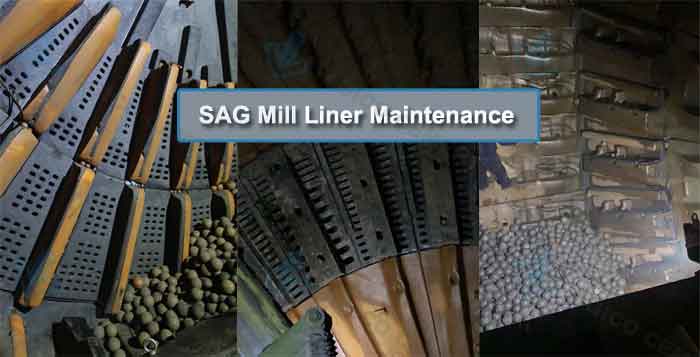
Besides the routine inspections, liner replacement is a major maintenance that requires SAG mill to shutdown. This step shall be completed by using liner handlers and specialized equipment, and usually lasting 3–5 days. In contrast, ball mill liner replacement is much straightforward and can be completed in 8–12 hours easily by an experienced maintenance worker.
Routine Inspections:
- SAG mill: monitor shell liner wear and check shell bolts for loosening
- Ball mill: pay close attention to girth gear and pinion lubrication
Both of them require regular bearing temperature monitoring, but SAG mills has bearing cooling sections with better cooling effect due to the high temperature caused by their heavier loads.
How to Select Between SAG and Ball Mill
1. High Clay Content in Ore – SAG Mill
Customers should choose grinding mills according to the ore characteristics, which is the primary factor in selecting between SAG mill and ball mills. When grinding ores with high clay content, SAG mills may develop critical-sized “sticky” layers, so a pebble crusher or dedicated scats crushing system is needed. While Ball mills can handle such materials by adjusting slurry density to aviod the sticky layer forming.
2. Grinding for Multiple Finenesses – Ball Mill
For operations requiring frequent adjustments to product fineness, ball mill is a better option, the fineness can be adjusted by classification settings. If you choose SAG mills, fine grinding equipment are essential to grind the ores into desired powder size.
3. Power Limit – Ball Mill
Power supply must also be considered. In remote sites with limited grid capacity, operating multiple smaller ball mills may be more practical than installing a single high-power SAG mill.
| Item | SAG Mill (Semi-Autogenous Mill) | Ball Mill |
|---|---|---|
| Grinding Media | Ore + 8–15% steel balls | 30–40% steel balls |
| Typical Feed Size | 200–350 mm | < 25 mm |
| Grinding Mechanism | Ore-to-ore impact with ball assistance | Ball-to-ball and ball-to-liner impact |
| Suitable Ore Types | Hard, competent ores (copper, iron, hard rock gold) | Medium-hard ores (lead-zinc, softer gold ores) |
| Process Stage | Primary grinding (coarse grinding) | Secondary or tertiary grinding (fine grinding) |
| Flow Configuration | Simple layout, fewer crushing stages | Multiple mills + classifiers (closed circuit) |
| Power Demand | High, often > 6000 kW | Lower per unit, typically 1500–3000 kW |
| Steel Consumption | 0.3–0.6 kg/t | 0.8–1.5 kg/t |
| Liner Life | 6–12 months | 3–6 months |
| Maintenance Difficulty | Liner change requires 3–5 days and mechanical handlers | Liner change completed in 8–12 hours |
| Best Use Cases | High throughput, coarse feed, hard ore | Flexible product size control, limited power supply |